
There are 135 million contactless cards in circulation across the UK, which doesn’t come as a surprise given the behavioural changes towards contact and hygiene since the start of the Covid pandemic. In fact, contactless transactions alone amounted to £8.4 billion in August 2020 which was the month when Rishi Sunak introduced the ‘Eat Out to Help Out’ scheme.
The national rollout for the increased transaction limit came into effect in October raising the contactless card payment limit from £45 to £100. The decision was taken by the HM Treasury and the Financial Conduct Authority following a public consultation and discussion with the retail and banking sectors in addition to a success with the earlier raise from £30 to £45 in April 2020.
David Postings, CEO of banking industry body UK Finance is optimistic of the change and stated:
“Contactless payment has proved very popular with consumers and an increasing number of transactions are being made using contactless technology”
“The increase in the limit to £100 will allow people to pay for higher value transactions like their weekly shop or filling up their car with fuel”
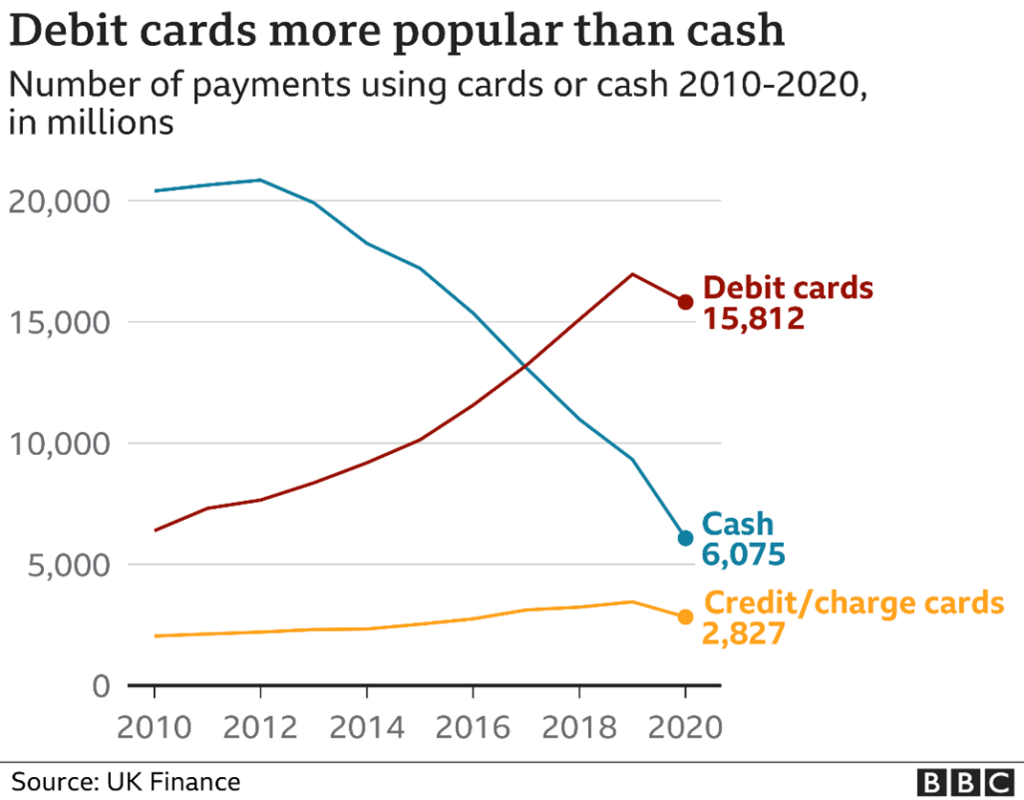
Figures from the UK Finance trade association show a massive rise in debit card usage in contrast to the decline of cash transactions between 2010-2020, this is illustrated by the BBC below:
How does this affect merchants?
As we have established contactless transactions are becoming more and more common as an easy and secure way to pay for goods and services. Particularly as the scope of what can be purchased within £100 increases the likelihood of the contactless card’s use. The increased limit will benefit both customers and business owners, provided they have the necessary technology.
Reduce queues and processing time
Customers using a contactless card complete transactions much quickly than using a pin alternative which requires the customer to take the card out of the wallet or worst still cash, as the business and customer take time counting those pounds and pennies, which is a thing of the past with contactless!
Chancellor Rishi Sunak had an equally positive outlook on the increase and said:
“Increasing the contactless limit will make it easier than ever to pay safely and securely – whether that’s at the local shops, or your favourite pub and restaurant… As people get back to the high street, millions of payments will be made simpler, providing a welcome boost for retailers and shoppers.”
What’s more with less waiting time you improve customer satisfaction at those busier times.
Less cash handling
Without the need for cash not only does the interaction between the business and customer become more seamless but it also results in more efficient operational and administrative functions as there is no need to cash up and lower risk from theft or loss due to mistakes, it also means fewer trips to the bank, be that to get change or to make deposits.
Less contact, less bacteria spread
The World Health Organization (WHO) advised people to be conscious of how they handled physical currency and encouraged them to pay using contactless methods. As a business, this helps safeguard your staff and sanitising high traffic areas can be better managed and risk mitigated.
An important consideration for businesses is to ensure their terminals, card readers and devices firmware have been updated to support the £100 contactless limit. Contact your merchant service provider for instructions on this.
